
Online Master in Public Health in Epidemiology
Analyze Data and Discover Interventions in Public Heath
Investigate Unanswered Questions in Public Health
Is there a public health challenge you feel compelled to solve? Tulane University’s online Master of Public Health (MPH) in Epidemiology equips you to find creative solutions to community health and well-being through research, quantitative reasoning, and data analysis.
Available online and on campus, the MPH in Epidemiology covers foundational public health topics while teaching you to operate tools that epidemiologists use to analyze the causes of disease and investigate population-level interventions.
As a student in the program, you’ll be able to build expertise in the public health areas that matter most to you, such as:
- Chronic Disease and Aging
- Infectious Disease
- Nutrition and Lifestyle
- Maternal and Reproductive Health
- Implementation and Clinical Science
- Social and Environmental Health
- Methods and Omics

The MPH in Epidemiology is designed to be completed part time over three years. However, you may choose to accelerate or reduce your course load throughout the program as your schedule allows.

You'll complete an Applied Practice Experience — hands-on public health work in a community-facing site — as well as an Integrative Learning Experience that addresses a research question explored through a literature review or data analysis report.

Prior experience with statistics or research methods is encouraged but not required to apply. However, students lacking this experience may be required to complete courses to determine readiness before full admission to the program.
* Note: Students who are not fully enrolled in the MPH in Epidemiology will not quality for federal financial aid.
What Will You Learn?
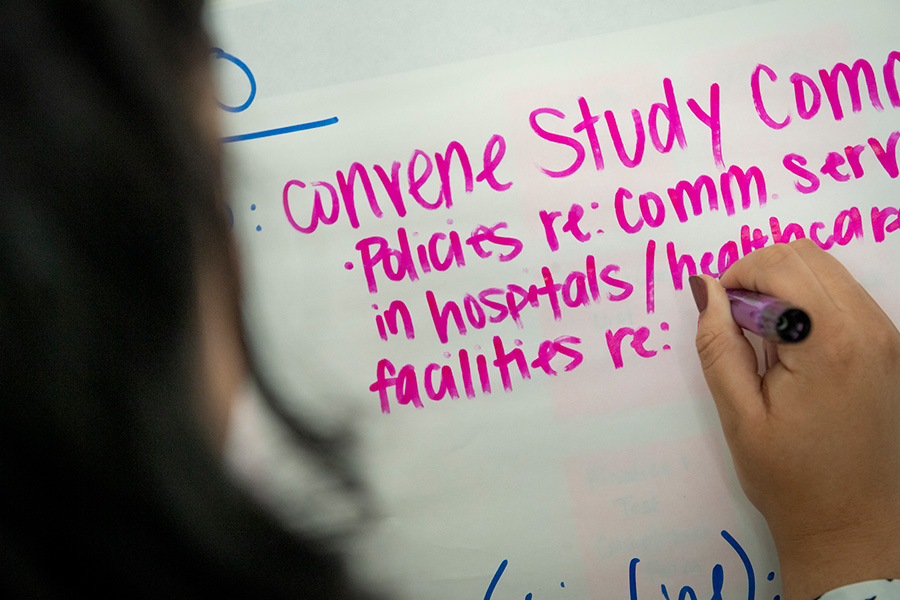
Through coursework and hands-on learning experiences, you’ll gain a thorough knowledge of epidemiologic methods and learn how to design studies, analyze data, and communicate results.
The program is designed to prepare you for the following competencies:
- Communicate characteristics and threats to validity of major study designs used in epidemiologic research
- Summarize the strengths and weaknesses of an epidemiologic study
- Write a study protocol for a specific research question
- Differentiate the major measures of disease frequency and association used in epidemiologic research
- Analyze public health data using appropriate statistical techniques and software
What Can You Do With an MPH in Epidemiology?
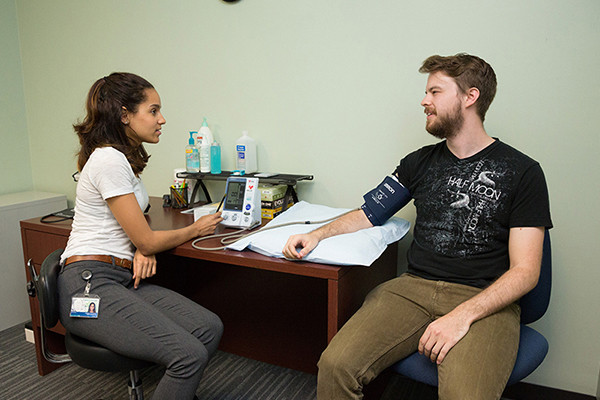
According to the U.S. Bureau of Labor Statistics (BLS), employment of epidemiologists is projected to grow 16 percent from 2024 to 2034 — much faster than average for all occupations.
As an MPH in Epidemiology graduate, you'll be a competitive candidate for roles such as:
Public health epidemiologist at a federal, state, or local agency
Infection control epidemiologist at a hospital or health system
Public health data analyst at a nonprofit organization
Data analyst at an academic or a private research firm
Explore the MPH in Epidemiology Curriculum
The 45-credit MPH in Epidemiology program will help you gain the skills to design and conduct studies that leverage epidemiologic data to support informed decision-making in health policy. The program is designed to be completed full time over 24 months and part time over three years. You may choose to accelerate or reduce your course load as your schedule allows.
Foundational Course Requirements:
- Fundamentals of Interprofessional Collaboration & Practice
- Foundations in Public Health
- Biostatistics for Public Health
- Epidemiology for Public Health
- Health Systems Policy and Management
- Design Strategies in Public Health Programs
Program Course Requirements:
- Computer Packages for Epidemiology
- Intermediate Biostatistics
- Epidemiologic Methods II
- Observational Epidemiology
- Survey Methodology
Additional Program Requirements:
- Elective Courses (12 credits)
With the MPH degree’s Applied Practice Experience (APE), you'll have the opportunity to gain hands-on, real-world experience in a public health organization while you earn your degree. You'll embark on your APE after you complete the foundational MPH courses, and you'll demonstrate your mastery of five key competencies: three foundational competencies outlined by the Council on Education for Public Health (CEPH) and two competencies outlined by program faculty.
Your APE is carefully planned alongside a faculty advisor and is supervised by a qualified public health preceptor. Tulane’s staff will work with you to find your APE placement in your local area — you can even complete your APE at your current employer so long as your practicum role differs from your current job.
All students must complete an Integrated Learning Experience (ILE) that demonstrates the synthesis of foundational and concentration competencies.
Meet Your Epidemiology Faculty
You will learn from an interdisciplinary faculty body in a research-focused department. Meet the Epidemiology faculty.
Tulane is consistently ranked among the top public health schools in the country, and I was drawn to its reputation for academic excellence and innovation in public health practice. Additionally, the school’s vibrant, inclusive community was an important factor for me. Being part of such a diverse environment enhances learning and prepares me to work effectively in varied public health settings.
— Harini Durai, MPH in Epidemiology ’26
Academic Excellence in Public Health
The Celia Scott Weatherhead School of Public Health & Tropical Medicine at Tulane University was the first school of public health in the United States and has been accredited since 1947, and all current programs are accredited by the Council on Education for Public Health (CEPH).

Funding Your Degree
U.S. citizens and permanent residents should complete the Free Application for Federal Student Aid (FAFSA) to determine eligibility for federal financial aid and work-study. The Celia Scott Weatherhead School’s school code is 002029. Tulane Financial Aid can provide additional assistance.
Merit-Based Scholarships
All master’s program applicants who have submitted and completed their applications by the priority deadline are automatically considered for scholarships without any additional application. You must apply by the priority deadline to be considered for scholarships upon admission. Students who are eligible for any of the scholarships below will be considered for them at any time, not just for priority deadlines. Priority applicants who qualify for any of the scholarships below will receive the higher-value scholarship package. Scholarships are available, with nearly half of all new students receiving some kind of merit-based award. Scholarship amounts may vary. Tulane employees using the tuition benefit are not eligible for scholarships. Scholarships awarded are intended to cover university tuition and fees.
Returned Peace Corps Volunteers
Weatherhead School is deeply passionate about the mission of the Peace Corps and is dedicated to supporting volunteers throughout their academic careers. We offer incoming returned Peace Corps volunteers (RPCVs) a scholarship equal to 35 percent of tuition.
Paul D. Coverdell Fellowship
Managed by the Celia Scott Weatherhead School Office of Global Scholars, the Paul D. Coverdell Fellowship is awarded to three RPCVs each year. The application for the Coverdell scholarship will be displayed to eligible students within the admitted student portal.
McNair Scholars
Tulane WSPH offers a scholarship in the amount of 50% of tuition to McNair scholars enrolled full-time in master’s programs.
Please note that if you belong to more than one of these groups, you will receive the higher-value scholarship.
Miscellaneous
The Association of Schools and Programs of Public Health (ASPPH) is also a useful resource for options on financing your degree.
Graduate-level students (pursuing master’s/PhD) seeking aid to supplement any assistance being offered by the Celia Scott Weatherhead School and/or the various departments may work with Tulane Financial Aid.
Admissions
Prospective Online MPH students will apply through the WSPH Application Starter.
The nonrefundable application fee for the Online MPH is $75. Applicants may be eligible for an application fee waiver. Contact your enrollment advisor for more information.
General admissions requirements for all programs include the following:
- A bachelor’s degree from an accredited institution of higher learning
- Academic achievement — typically a GPA above 3.0 on a 4.0 scale
You'll need the following admissions materials:
- Official transcripts sent directly to the Celia Scott Weatherhead School from all U.S. and Canadian institutions attended
- A statement of purpose that clearly and directly addresses the following:
- Why are you applying to the Celia Scott Weatherhead School of Public Health and Tropical Medicine at Tulane University and to the specific program, option, or concentration you chose?
- How will earning this degree help you achieve your professional goals?
- What have you learned from successes or challenges in your past educational, professional, or personal experiences? Please use specific examples, as applicable.
- Resume/CV
- Minimum of two letters of recommendation
Online MPH in Epidemiology applicants do not need prior work experience. Students who lack quantitative preparation may complete the 15-credit foundational certificate and then transition into the MPH in Epidemiology after demonstrating readiness.*
*Note: Certificate students are not fully enrolled in the MPH in Epidemiology and are not eligible for federal financial aid.
Applications that are submitted and completed by the priority deadline will be considered for funding opportunities (no additional application required).
International students (or students who have earned their degree outside the U.S. or Canada) must submit a course-by-course evaluation of international coursework. Evaluations can take up to a month to complete from the time the agency receives your international transcripts, so we recommend getting an early start on this process to ensure that the evaluation is received by the application deadline.
We can accept WES, ECE, and TEC (formerly known as SpanTran) evaluations. Please have this evaluation sent directly to sphtmadmissions@tulane.edu. If you use TEC (formerly known as SpanTran), please be sure to use the custom application they've created, which you can access on their website.
International students may also be required to submit proof of English language proficiency (IELTS, TOEFL, or Duolingo). Please refer to the international student section of the FAQ to determine whether you’re required to submit scores.
About the Celia Scott Weatherhead School of Public Health and Tropical Medicine

With century-old roots in the heart of New Orleans, the Tulane University Celia Scott Weatherhead School of Public Health and Tropical Medicine is dedicated to our mission to support the Gulf South while understanding national health issues and addressing pressing global health concerns. At the Weatherhead School, public health is not just a field of study, but of action, where learners gain the real-world skills and competencies to strengthen their communities.
Are you ready to connect the dots in public health? Explore your potential with Tulane’s online MPH in Epidemiology.
Please visit our Department of Epidemiology if you're looking for on-campus programs.